What Is Frase? The Content Operating System for AI Search
Frase is one system that researches, writes, optimizes, publishes, and maintains the content your team uses to rank on Google and get cited by AI. Here is what it does, in full.
What is Frase?
Frase is an agentic SEO and GEO platform: one system that researches, writes, optimizes, publishes, and maintains the content your business uses to rank on Google and get cited by AI engines like ChatGPT, Perplexity, Claude, and Gemini. Instead of paying for a separate research tool, a separate writing tool, a CMS, a rank tracker, and an AI-monitoring tool, your team runs the whole loop in one place. Frase does the work. You stay in control. It starts at $49 a month with a seven-day free trial, and it fits both in-house content teams and agencies.
I want to be precise about that word "platform," because a lot of AI tools use it loosely. Frase is not a chat box that hands you a draft and wishes you luck. It is the system your content actually lives inside: it finds what to write, writes it in your brand's voice, scores it for both Google and AI search, publishes it to your CMS, watches it after it goes live, and drafts the fix when it starts to slip.
None of that makes the writer optional. Frase's editor is a real writing environment: your team can start from Frase's draft, or from a completely blank page with no AI involved at all, and either way the piece is scored live for SEO and GEO as they type. Writers keep their craft. Frase keeps the scoreboard. I won't tell you the editor is a pleasure to use; G2 reviewers handle that part, at 4.8 out of 5 across 309 reviews with ease of use a consistently praised theme.
Most teams assemble that out of a pile of separate subscriptions:
- a keyword and SERP research tool
- an AI writing tool
- a CMS or headless content layer
- a rank tracker for Google
- a monitor for whether AI engines cite you
Frase is all of those jobs in one system, run as a single loop instead of five tools that never talk to each other.
Why does Frase exist?
People stopped clicking and started asking. More of the questions that used to bring visitors to your site now get answered directly, by search engines and AI assistants that cite a few sources and skip everyone else. Content teams were meeting that shift with a pile of tools that don't talk to each other, and nobody accountable for whether the work actually got found. We built Frase because content deserves one system that carries a piece from the question someone asked to being the answer they got.
What does Frase actually do?
The clearest way to understand Frase is to follow one piece of content from idea to maintenance. That path is the product, and it runs as a loop:
| Stage | What Frase does |
|---|---|
| Research | Pulls live top-ranking search results and grounds a research session in your target audience |
| Write | Drafts in your brand voice, scored for both SEO and GEO citability, with E-E-A-T signals shown |
| Publish | Sends the piece to WordPress, Sanity, Webflow, Wix, or FraseCMS, on your approval |
| Monitor | Tracks Google ranking decay through Content Guard and AI-engine citations through AI Visibility |
| Fix | Drafts the fix when a page slips and republishes it once you approve |
| Listen | Frase Answers captures the questions your visitors ask, which feed the next research brief |
Now the same path in detail.
Research: it starts with what search and buyers are actually asking
Frase opens with live research. When you give it a topic, it pulls the top-ranking search results for that query, analyzes what those pages cover, and builds a picture of what a competitive piece has to answer. That research is not a static keyword dump. It runs as a research session that you ground in a specific target audience, so the brief reflects who you are writing for, not just the words they type.
The part I am proudest of is what happens to that research afterward. It stays attached to the content it produced. The sources, the questions people were asking, the brief the piece was written against: Frase keeps that evidence with the page. That matters later, when the page needs to be re-optimized, because Frase can start from the original demand the page was built to serve instead of guessing at it fresh.
Writing and scoring: your voice, graded for two kinds of search
Frase writes in your brand's voice, not a generic one. It builds a brand-voice profile from your existing content and applies it hierarchically, so an organization, a specific site, and an individual project can each carry their own voice and terminology. The goal is content that sounds like your team wrote it, because your team's judgment is the thing a language model cannot invent.
As you write, Frase scores the draft two ways at once. It gives you an SEO score for how well the page is built to rank on Google, and a GEO score for how citable the content is to AI engines. Citability is a real, separate discipline: AI answer engines quote content that is quotable, well-structured, clearly defined, and backed by data. Frase also computes E-E-A-T signals (experience, expertise, authoritativeness, trust) and shows them alongside the other two scores, so you can see all three read on the same page before you publish. If you want the plain-language version of why AI citation is now its own game, we wrote a full explainer on what generative engine optimization means.
Publishing: to the CMS you already run, or to ours
When the piece is ready, Frase publishes it. It pushes to five destinations: WordPress, Sanity, Webflow, Wix, and FraseCMS, Frase's own content layer. You connect your CMS once, and Frase sends the title, body, slug, SEO meta, and featured image straight from the editor, as a draft or a live post. On the platforms that support it, structured data goes out too. There is no separate plugin to install to publish to WordPress; Frase uses the standard WordPress REST API, and if you run Yoast or RankMath it writes into the fields those plugins expect.
By default, nothing goes live on its own. A person reviews and approves each publish. I will come back to what happens when you want to change that. If you want the mechanics of each connection, we documented exactly what Frase pushes to each CMS.
What is FraseCMS?
FraseCMS is Frase's own headless content layer, the fifth publishing destination, and the destination built for AI search visibility. Instead of pushing your content out to a third-party platform, you publish into Frase and Frase serves the page. There is no external credential to manage and no field mapping to maintain.
FraseCMS earns its place because of four things the external platforms cannot do together on their own:
- Pages keep their research. A FraseCMS page carries the research evidence it was built from, retrievable through the delivery API. When a ranking slips months later, re-optimization starts from the original evidence rather than a blank guess.
- Structured data is regenerated on every render. The JSON-LD schema that tells Google and AI engines what a page claims is rebuilt each time the page is served, from the live content, so the machine-readable version never drifts out of sync with what a reader actually sees.
- Publishing and scheduling are native. FraseCMS supports draft, scheduled, and live publishing directly, with a scheduler that ships posts when their time arrives.
- Indexing is instant. The moment a FraseCMS page goes live, Frase re-indexes it for Frase Answers, so it becomes citable on your own site the second it publishes, with no separate sync step.
That is the honest case for FraseCMS. It does not make WordPress, Sanity, Webflow, or Wix second-class; those remain full publishing destinations. FraseCMS is simply where all four of those capabilities show up together without you wiring them yourself. You can read more about what FraseCMS does differently.
What is Frase Answers?
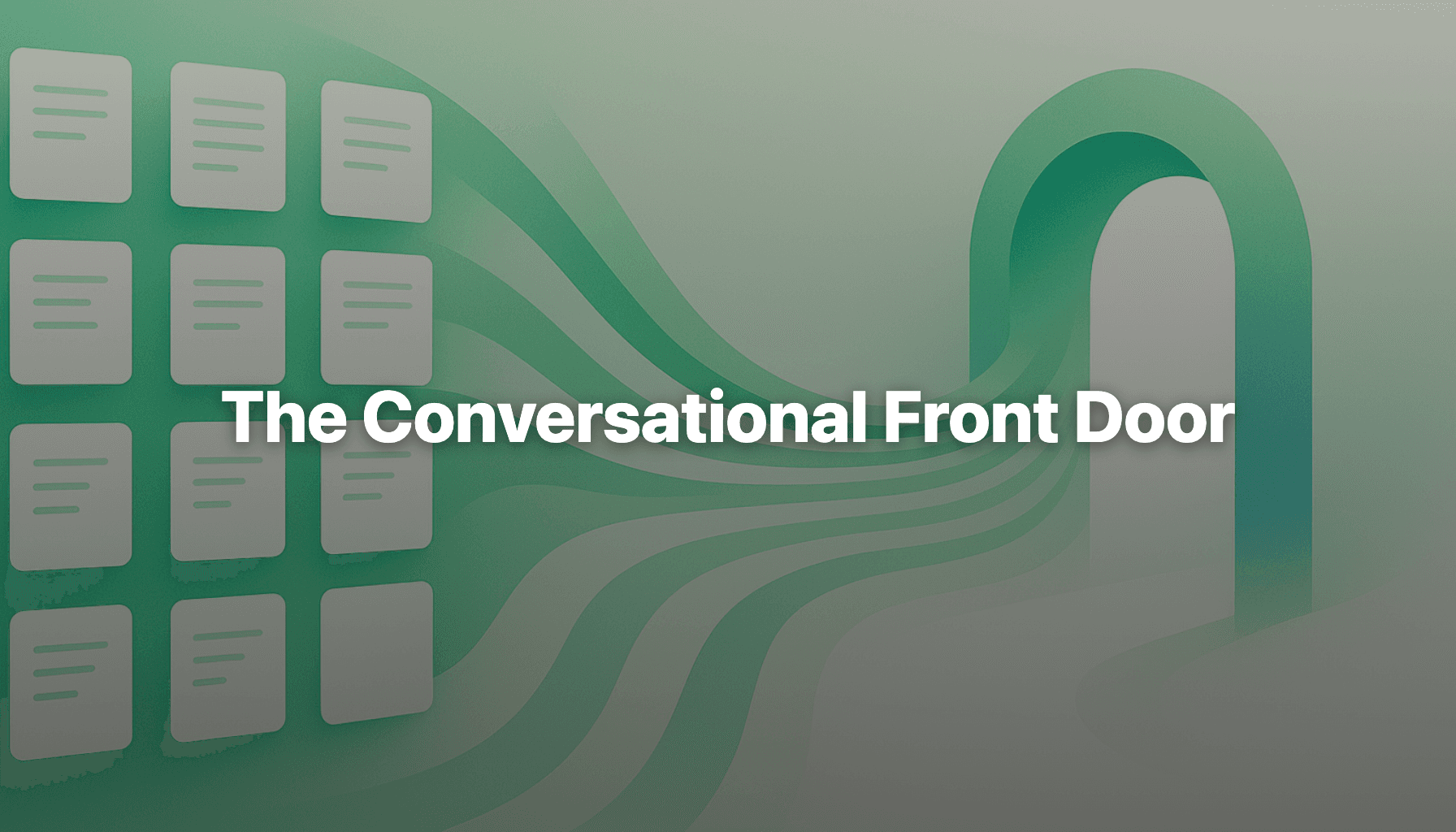
Frase Answers is a conversational front door for your own website. It is an AI answer widget that sits on your site and answers your visitors' questions using your content, and only your content. Ask it something it cannot support from your material, and it says so rather than inventing an answer.
Two things make Answers more than a search box. First, it reads directly from your content, including anything you publish through FraseCMS, so the answers stay grounded in what you actually said. Second, and this is the part most teams underrate, it captures every real question a visitor asks, in the visitor's own words. That is first-party demand. It is cleaner than a keyword tool and cleaner than scraping an AI engine, because it is your actual audience telling you what they came to find out. Frase clusters those questions and turns them into signals for what to write next, which feeds the research step at the top of the loop. And because Frase serves sites across many industries, Answers can also show you what your whole vertical is being asked, not just your own visitors. That industry view is aggregated and anonymized, a topic only appears when enough independent companies are seeing the same demand, and it is available to your team and to the agents deciding what to write next. Your roadmap gets two demand signals: your audience's questions, and your industry's.
So the loop closes on itself. Visitors ask questions, Answers records them, those questions become the next content brief, that content publishes and gets indexed, and Answers can cite it to the next visitor. You can see the widget and how it works on the Frase Answers page, or read our deeper piece on running an answer engine on your own website.
How does Frase keep content from decaying?
Content does not fail on publish day. It fails slowly, months later, when a competitor updates their page or Google reshuffles a result and your traffic quietly erodes. That is the problem Content Guard exists to solve.
Content Guard watches your published pages for ranking and traffic decay using Google Search Console data: click trends, position trends, the age of the page, and competitor movement in the search results. When a page starts slipping, Frase drafts the fix. What it does next is the important part, and I want to be exact about it, because this is where a lot of "autonomous AI" claims fall apart.
Content Guard republishes the fix on your approval. By default, Frase proposes the change and waits for a human to accept it before anything reaches your live site. You can opt into having low-risk edits applied automatically, but even then the safe posture holds: nothing about your live page changes without your say-so unless you have deliberately turned that on. Frase monitors, drafts, and republishes on approval. It does not quietly rewrite your site behind your back. You can see the feature on the Content Guard page.
Content Guard watches Google. Tracking whether AI engines cite you is a different job, handled by a different feature.
How does Frase track whether AI engines cite you?
AI Visibility is Frase's monitoring for the AI side of search. It checks, on a daily cadence, whether AI engines like ChatGPT, Perplexity, Claude, Gemini, and Google AI Overviews are citing your content for the prompts you care about. When your citation status changes, when you gain a mention, lose one, or a competitor overtakes you, Frase alerts you.
AI Visibility is deliberately separate from Content Guard, and I keep them separate on purpose. Content Guard watches Google ranking decay and drafts fixes. AI Visibility watches AI citation and reports what it sees; when you ask, it runs a gap analysis and suggests content to close the gap. It monitors and informs. It does not auto-fix. Keeping the two features distinct is honest about what each one actually does, and it keeps the human, you, in the decision seat for the AI side.
If you want to see where you stand right now, you can check your AI visibility across engines for free before you commit to anything, or read our overview of what AI visibility means.
Can Frase publish on its own?
Yes, but only after it has earned the right, and only if you switch it on. This is the question I get asked most, so here is the straight answer.
Frase's default is human-in-the-loop. A person approves every publish. On top of that, Frase has a graduated autonomy system: for a given site and content type, Frase can earn the right to publish on its own by building a track record of approved drafts. You set a quality bar and a monthly cap, and if the approval rate for that content type drops below your threshold, Frase automatically pauses it and pushes it back to manual review. Un-pausing is always a human decision, and nothing you have already published ever gets un-published.
I want to be careful not to oversell this. Autonomous, unattended publishing is opt-in, it is consent-gated, it runs on FraseCMS, and it is something a team turns on deliberately once Frase has proven itself, not a switch that is flipped on for everyone by default. Frase is built so you can trust it with more over time. It is not built to take the wheel without being asked.
Is Frase built for AI agents?
It is, and that is becoming one of the more important things about it. Frase runs over more than a screen. The same platform is available through a public API, a Model Context Protocol (MCP) server, and a command-line interface. That means Frase can run inside the AI assistants your team already uses, so an agent working in Claude or a similar tool can research, draft, score, and publish through Frase directly.
This is not a toy integration. The agent is governed, with limits and cost caps, and it stays grounded in your business context and brand voice the same way the rest of the platform does. Whether your team is marketers who live in the editor or engineers who would rather script it, Frase is the same product underneath. You can explore the agent-native side of Frase if that is how you want to work.
Is Frase for teams or agencies?
Both, and they use it differently.
In-house content and SEO teams use Frase as their whole content operation: research, writing, publishing, and maintenance in one place instead of a stack of subscriptions that do not talk to each other. Agencies use Frase to run that same loop across many clients:
- multiple sites managed under one account
- multiple seats with defined roles
- exportable reports so client reporting is not a manual chore
- per-client brand voice, so each client's content sounds like that client
Deeper agency needs like white-label client portals and custom domains live on the Enterprise plan.
The common thread is that Frase rewards teams who publish regularly and want the work to compound. Every page you publish keeps earning: it ranks, it gets cited, it answers questions through Answers, and it feeds the next brief. That is the loop, and it runs whether you are one marketer or an agency serving fifty clients. If you run client work, our agencies page covers how the multi-site setup works.
What does Frase cost?
Frase starts at $49 a month, or $39 a month on an annual plan, with a seven-day free trial and no credit card required to begin. Plans scale up from there through Professional and Scale, with an Enterprise tier priced Custom for larger teams and agencies that need white-label and advanced controls. Higher tiers add more monitoring, more autonomy, and more seats. Price is worth knowing, but it is not really the point. The point is that one subscription runs the loop that used to take a stack of tools.
Where to start
If you take one thing from this, let it be the shape of the thing: Frase is a loop, not a feature. It listens through Answers, creates through research and writing, publishes to your CMS or FraseCMS, watches through AI Visibility and Content Guard, and fixes what slips, then does it again. Most tools give you one stage of that and leave the rest to you.
The fastest way to understand it is to run it. You can check your AI visibility for free to see where AI engines cite you today, run a free GEO score on a page you already have, or start a free trial and take one piece of content through the whole loop. That last one is the real demo, because Frase is easier to feel than to describe.
Frequently Asked Questions
What is Frase?
Frase is an agentic SEO and GEO platform: one system that researches, writes, optimizes, publishes, and maintains content built to rank on Google and get cited by AI engines like ChatGPT, Perplexity, Claude, and Gemini. It replaces a stack of separate research, writing, CMS, rank-tracking, and AI-monitoring tools with a single loop. It starts at $49 a month with a seven-day free trial.
What does Frase do?
Frase runs the full content loop. It researches what to write from live search results and your visitors' real questions, writes it in your brand voice, scores it for both Google (SEO) and AI search (GEO), publishes it to your CMS or to FraseCMS, tracks whether AI engines cite it, watches for ranking decay in Google, and drafts the fix when a page starts slipping.
What is FraseCMS?
FraseCMS is Frase's own headless content layer and one of its five publishing destinations. Pages published to FraseCMS keep the research they were built from, regenerate their structured data on every render, support native scheduled publishing, and are indexed for Frase Answers the moment they go live. It is the destination built specifically for AI search visibility.
What CMS platforms does Frase publish to?
Frase publishes to five destinations: WordPress, Sanity, Webflow, Wix, and FraseCMS. You connect your existing CMS once and publish straight from the Frase editor, or you can host directly on FraseCMS. You can connect more than one CMS to a single Frase site and choose the destination per publish.
What is Frase Answers?
Frase Answers is a conversational AI widget you place on your own website. It answers visitors' questions using only your content, and it captures every question visitors ask in their own words. Those questions become first-party demand signals that tell you what to write next, and Answers can also show anonymized, aggregated demand from across your industry, both feeding the research step of the content loop.
Does Frase get you cited by AI engines?
Frase is built to. It scores content for citability (its GEO score), tracks whether engines like ChatGPT, Perplexity, Claude, Gemini, and Google AI Overviews are citing you through its AI Visibility feature, and alerts you when your citation status changes. Frase gives you the tools and the visibility; citation itself is earned by the quality and structure of the content you publish.
Does Frase publish content automatically?
By default, no. A person reviews and approves every publish. Frase does offer a graduated, opt-in autonomy system where, for a specific content type on FraseCMS, it can earn the right to publish on its own after building an approval track record, subject to a quality bar and a monthly cap that auto-pauses if approval rates drop. Unattended publishing is something you deliberately turn on, not a default.
How is Frase different from a writing tool like an AI writer?
An AI writer hands you a draft and stops. Frase runs the whole loop around the writing: it researches from live search and real visitor questions, scores for Google and AI search, publishes to your CMS or FraseCMS, monitors your pages after they are live, and drafts fixes when they decay. The writing is one step inside a system, not the whole product.
Is Frase for marketers or developers?
Both. Marketers and SEO teams use Frase through its editor. Developers and technical teams can drive the same platform through its API, MCP server, and CLI, which lets Frase run inside AI assistants like Claude. It is the same product either way.
How much does Frase cost?
Frase starts at $49 a month, with a lower annual rate and a seven-day free trial that needs no credit card. Plans scale through Professional and Scale, with a Custom-priced Enterprise tier for larger teams and agencies that need white-label features and advanced controls.
About the author
Shegun Otulana
Founder & CEO
Shegun Otulana is CEO of Copysmith AI, parent company of Frase.io and Describely.ai. He's a serial entrepreneur with multiple exits and has been building companies at the intersection of search, marketing, SaaS, and artificial intelligence since 2013. Shegun writes about generative engine optimization, AI search, and the future of content marketing.
Related articles


See Frase run on your own content.
Research your market, draft in your voice, and track where you show up across Google and AI search. Start free.
Start free trial7-day free trial. No credit card.